
Inside the planning, culinary stations and large-event execution behind a 1,100-guest celebration at Armature Works.
There’s a point when catering a large event stops being a matter of simply making more food.
Feeding 100 people is one thing.
Feeding 1,100 people, while keeping the food fresh, the lines moving, the chefs cooking, and the experience engaging? It is an entirely different challenge.
For a recent corporate celebration at Armature Works in Tampa, Good Food Events + Catering was asked to do exactly that.
The evening brought together 1,100 guests for a Havana Nights-themed event featuring passed hors d’oeuvres followed by dinner served from a collection of culinary stations throughout the venue.
For us, the challenge wasn’t simply figuring out how to feed everyone. It was figuring out how to make dinner for 1,100 people still feel like the Good Food experience.
Start With the Flow
When you’re designing a menu for a thousand guests, one of the first questions isn’t necessarily what you’re serving. It’s how are people going to get it? A single buffet might technically feed a large crowd, but that’s not necessarily how we want guests to experience an event.
Instead, we designed this menu around a collection of independent culinary stations. Guests could move throughout the event, choose what interested them and come back to discover something different later in the evening. The original event plan specifically described the stations as independent experiences where guests could pick and choose what they wanted.
That approach helps distribute 1,100 people throughout a large venue.
More importantly, it makes dinner part of the party.
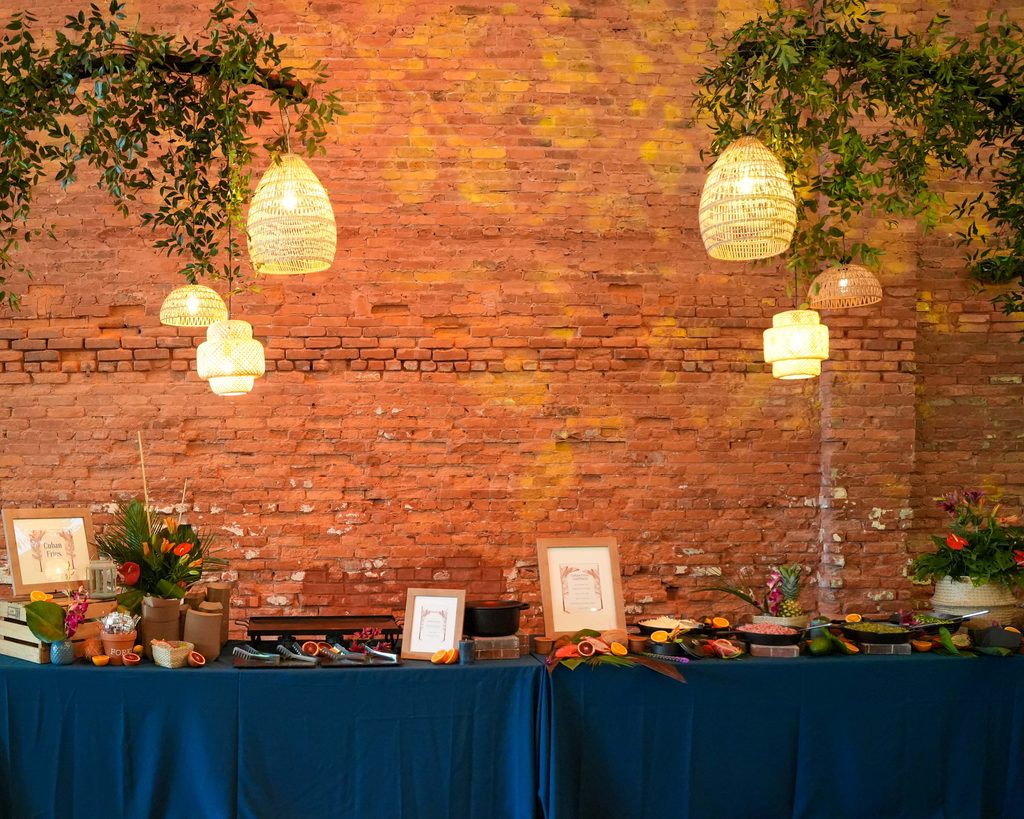
A Little Tampa in the Middle of Havana Nights
For the Latin Steakhouse, our chefs hand-carved grilled churrasco steak with cilantro chimichurri alongside citrus herb grilled chicken, arroz congrí, Tampa-style beef empanadas, sautéed plantains and seasonal vegetables.
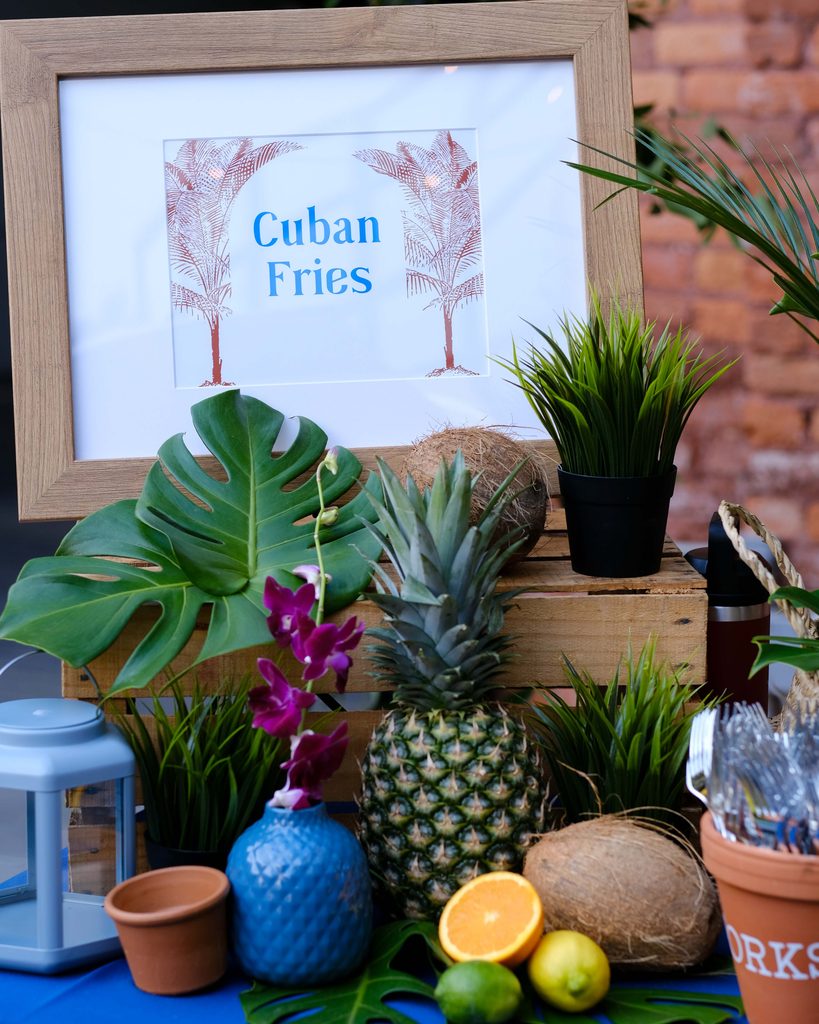
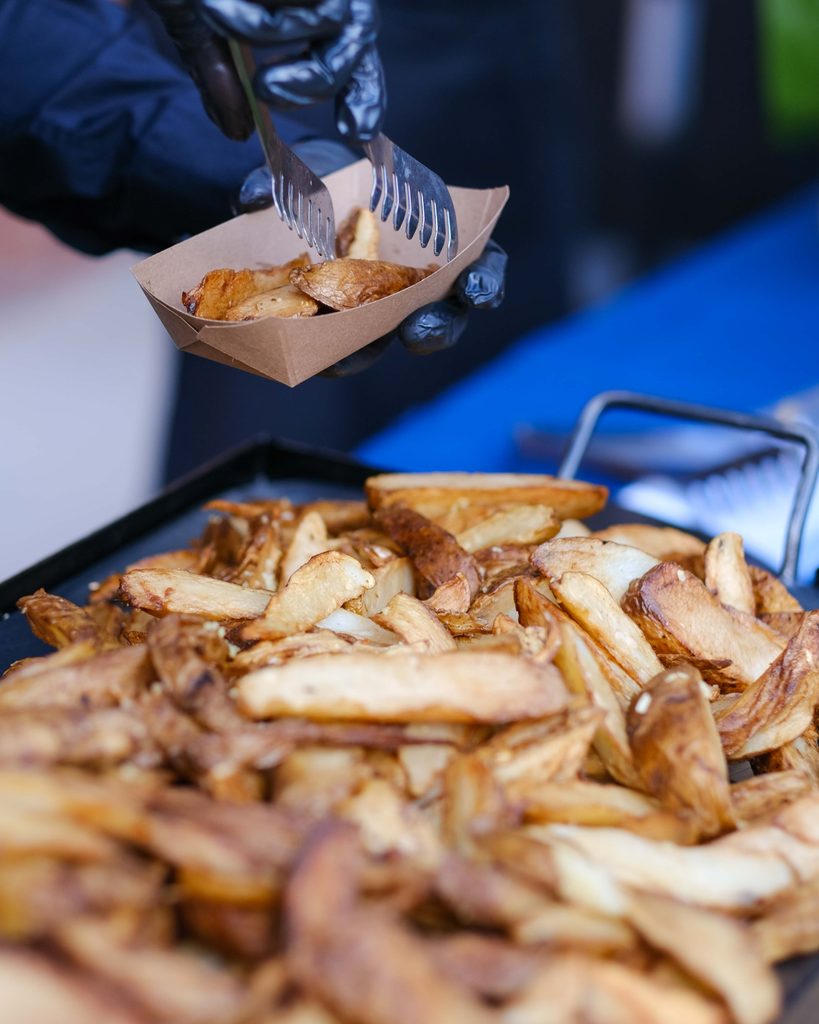
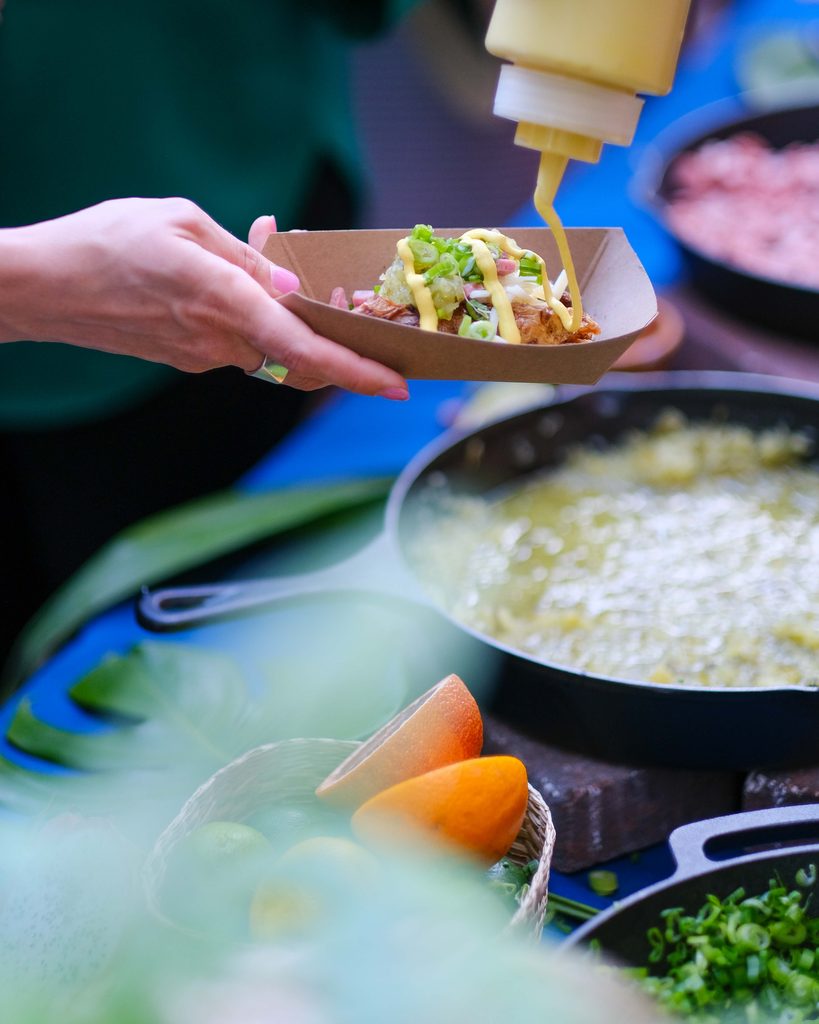
Then there were the Cuban Fries. This is exactly the kind of station we love for a large event because it checks several boxes at once: it’s recognizable, it’s interactive, it has a sense of place, and it can be customized for the person standing in front of us.
We start with fried potato wedges tossed with garlic and salt. Our station team then adds the components of a Tampa Cuban sandwich: slow-roasted mojo pork, Swiss cheese, diced salami, chopped dill pickles, yellow mustard aioli and scallions.
The potatoes themselves are vegan, which also means the station can be adapted for different dietary needs simply by changing the toppings.
And yes, putting the flavors of a Cuban sandwich on a pile of hot, crispy potatoes is exactly as much fun as it sounds.
One Event. Many Different Ways to Dine
Variety becomes especially important when you’re serving a crowd this large.
Not everyone wants steak. Not everyone wants pasta. Some guests want something lighter. Some have dietary restrictions. Others want to try a little bit of everything.
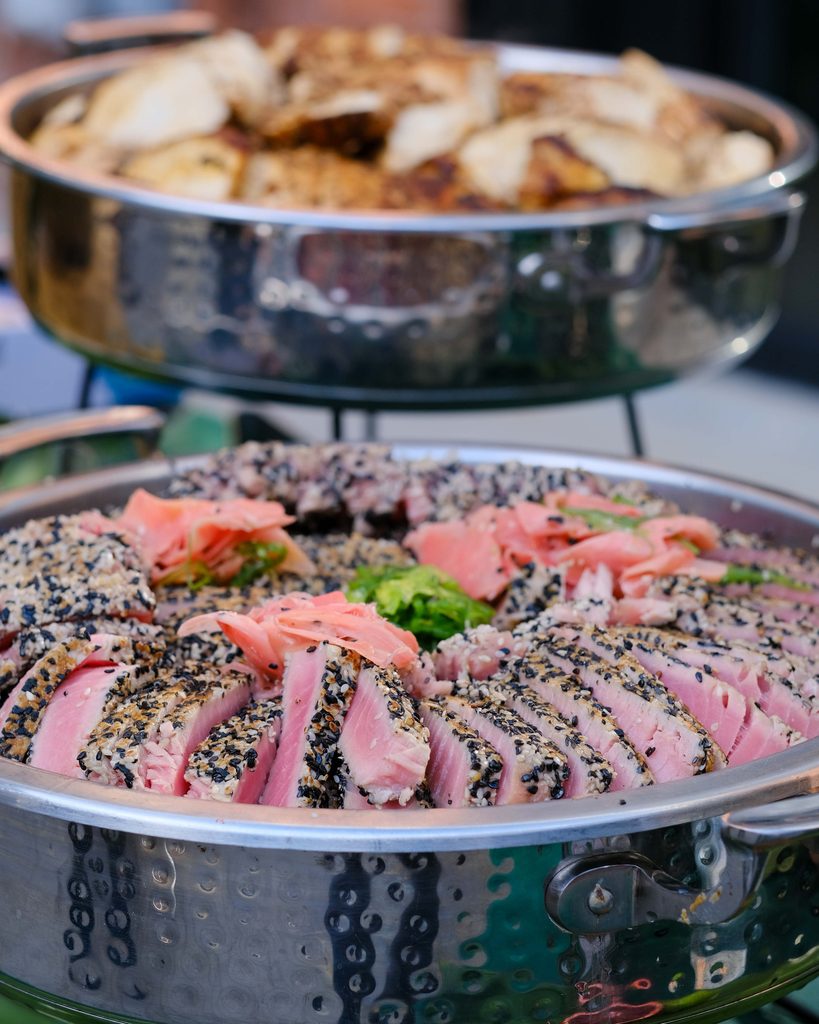
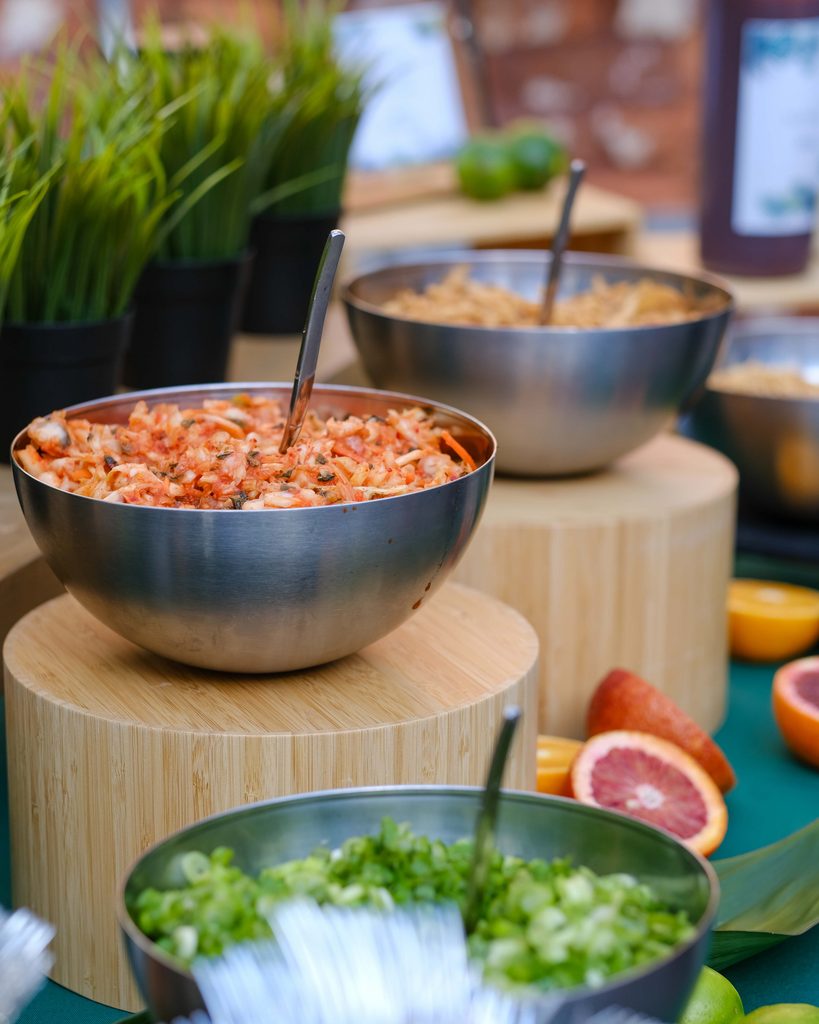
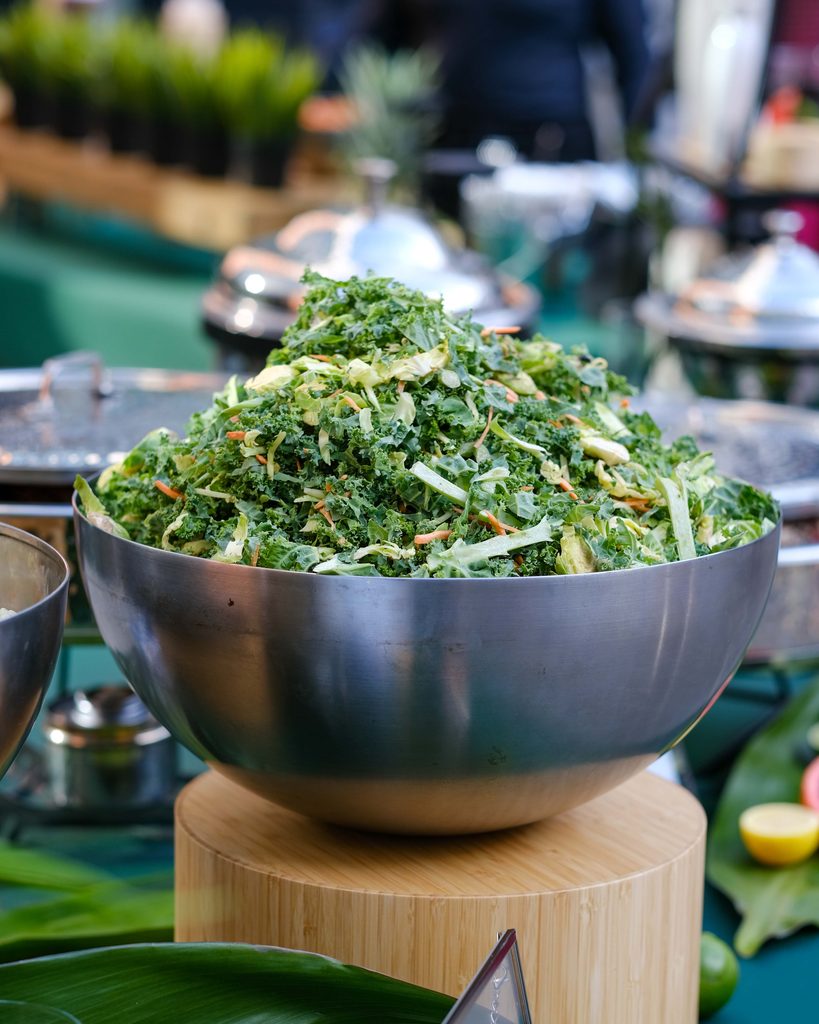
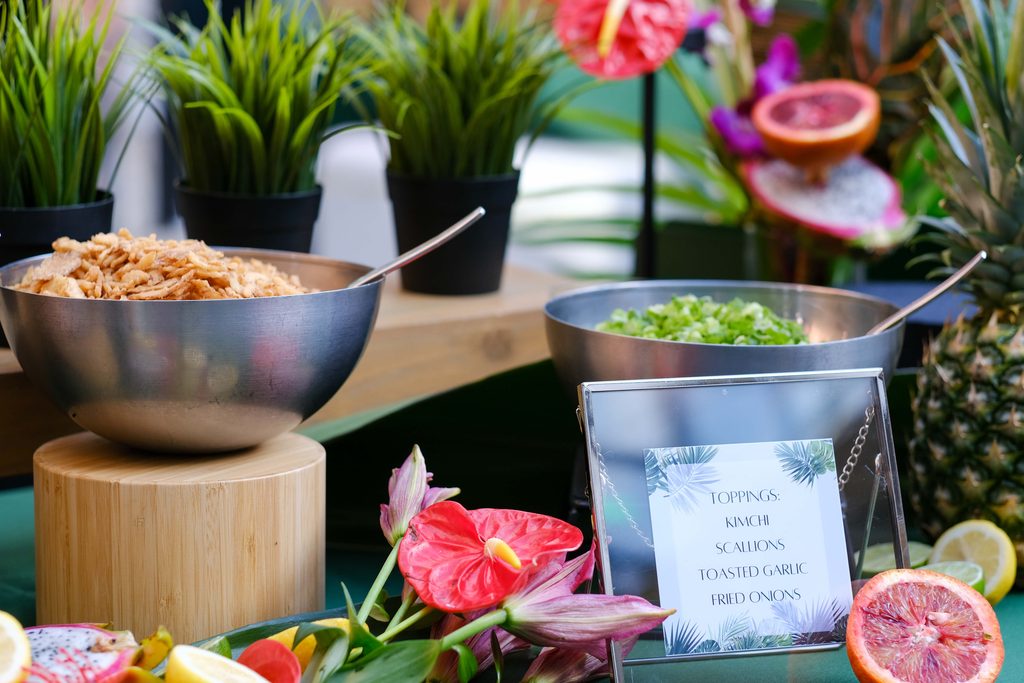
Alongside the Latin-inspired dishes, guests could build a Fresh Bowl with blackened chicken or seared ahi tuna, sweet potato noodle salad or super greens, sesame broccoli, teriyaki mushrooms, kimchi and a myriad of other toppings.
Meanwhile, another part of the event operated more like a restaurant kitchen.
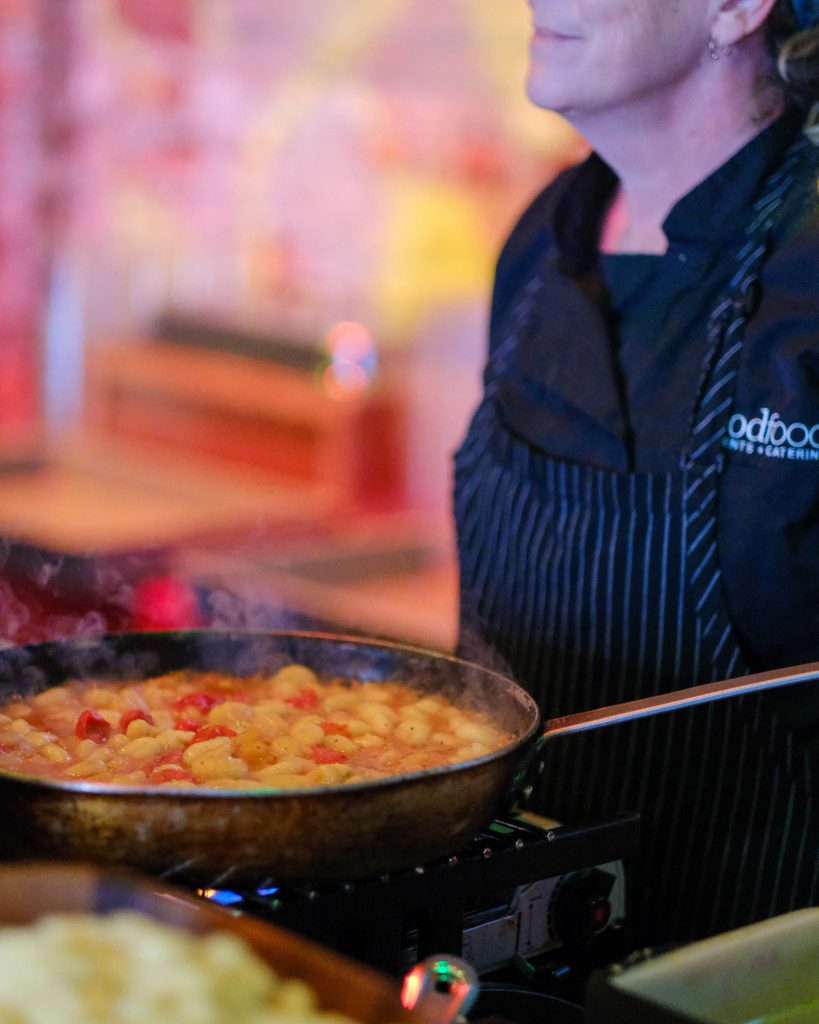
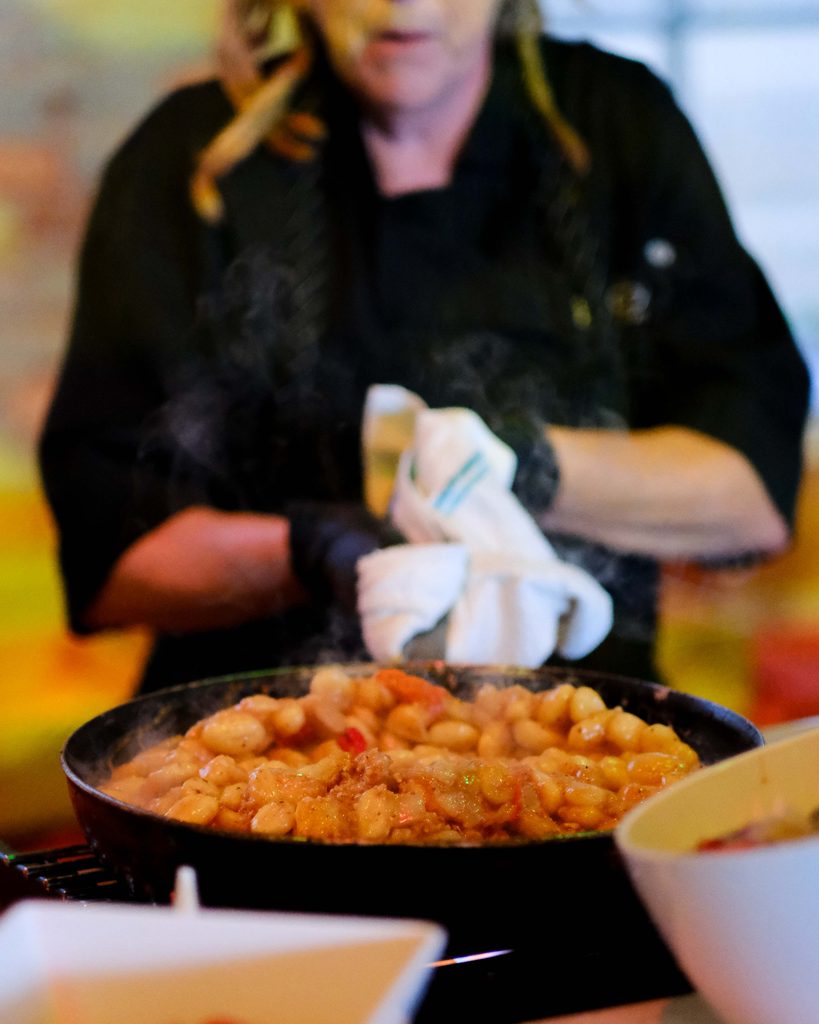
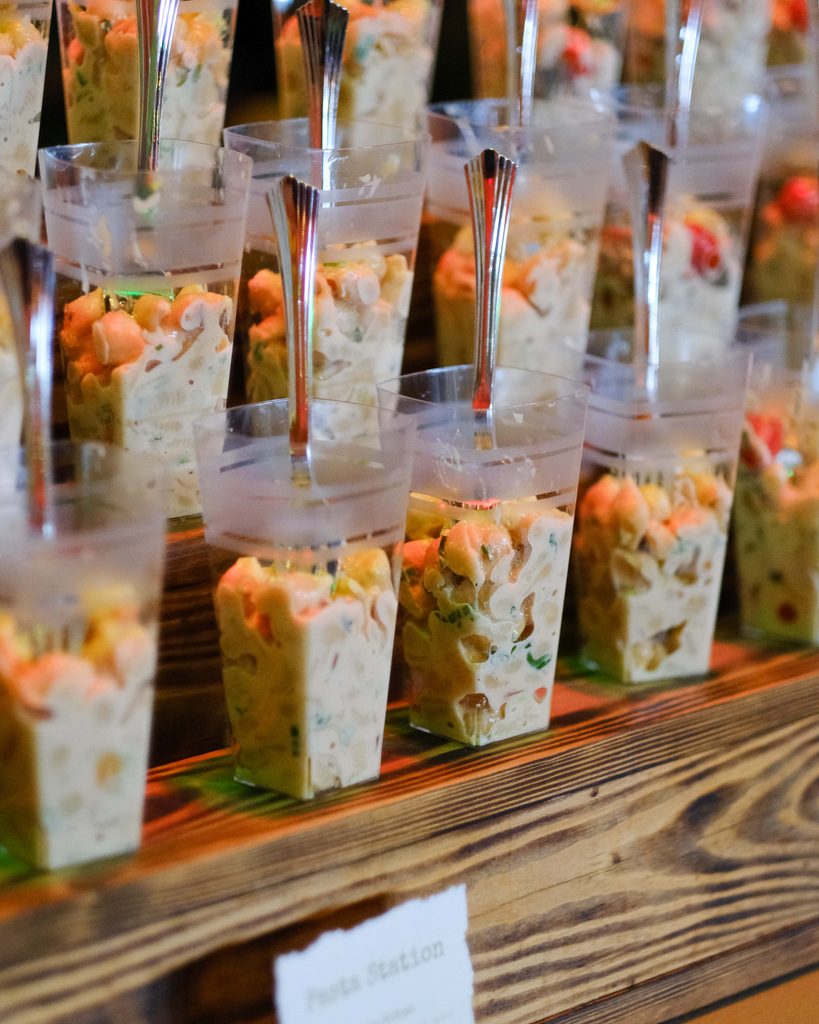
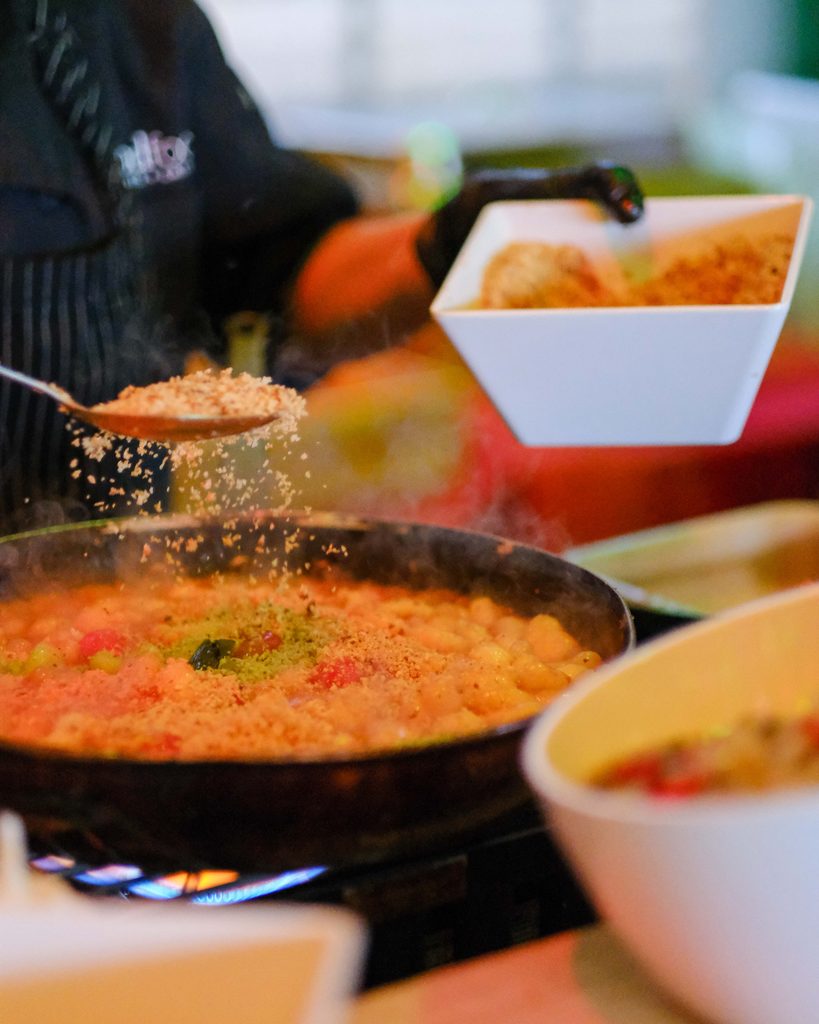
At Pasta & Co., our chefs continuously prepared composed pasta dishes throughout service: Shrimp Roban with jumbo shrimp and a spicy cream sauce; Smoked Chicken with Cavatappi, broccolini, blistered cherry tomatoes and Parmesan cream; and our showstopper: Pan-Sautéed Gnocchi with Cajun seasoning, white wine, garlic, charred peppers and grape tomatoes.
That word “continuously” matters.
Because large-event catering doesn’t have to mean making everything hours earlier and holding it until somebody comes along with a plate.
Whenever the venue and event allow it, we’d rather keep our chefs involved in the food: Cooking. Carving. Finishing. Serving.
Scale Shouldn’t Eliminate Interaction
This is probably the part of large-event catering we’re most passionate about. As the guest count gets bigger, it’s easy for hospitality to become more impersonal. We go the other direction.
A chef carving churrasco for a guest.
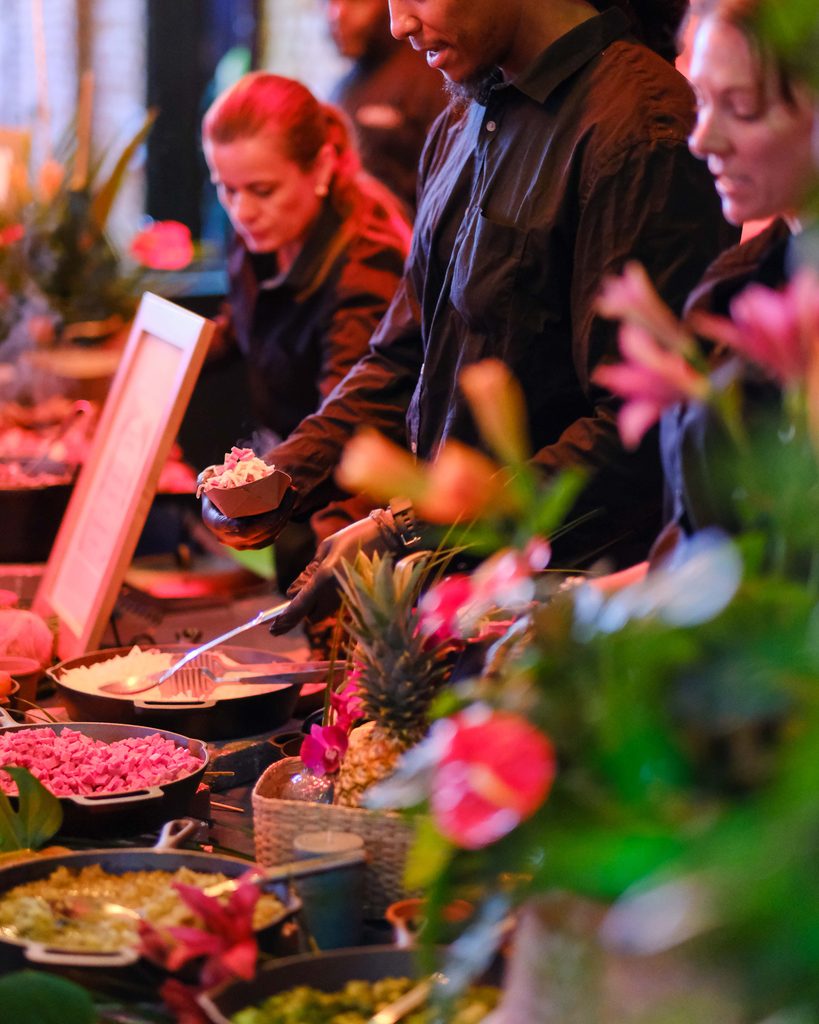
A station attendant building someone’s Cuban Fries exactly the way they want them.
A chef sautéing pasta while guests enjoy the show.
Those little interactions create a very different feeling than simply putting food on a buffet and replenishing it from behind the scenes. The guest may be one of 1,100 people in the building, But at the station, they’re the person standing in front of us.
Large Events Are Won Behind the Scenes
Of course, what guests see is only half of the story.
For this event, the Good Food team included 40 servers, 16 event chefs and three event coordinators, in addition to the planning, preparation, setup and cleanup surrounding the event.
Before the first guest ever picked up a plate, our team had already worked through production quantities, equipment, station placement, replenishment, dietary restrictions, staffing and timing. For guests with severe celiac restrictions, the event plan even included individual menu “roadmaps,” while dietary information was identified on station signage throughout the event.
That’s the less glamorous side of large-event catering, but it’s also one of the most important. At 1,100 guests, a small problem multiplied 1,100 times becomes a very large problem. The goal of good planning is to solve those problems before guests ever know they existed.
Different Event. Same Approach.
Large-event capability isn’t about executing one big night successfully. It has to be repeatable.
At another large-scale event at Armature Works, we used the same station-driven philosophy with a completely different culinary direction.
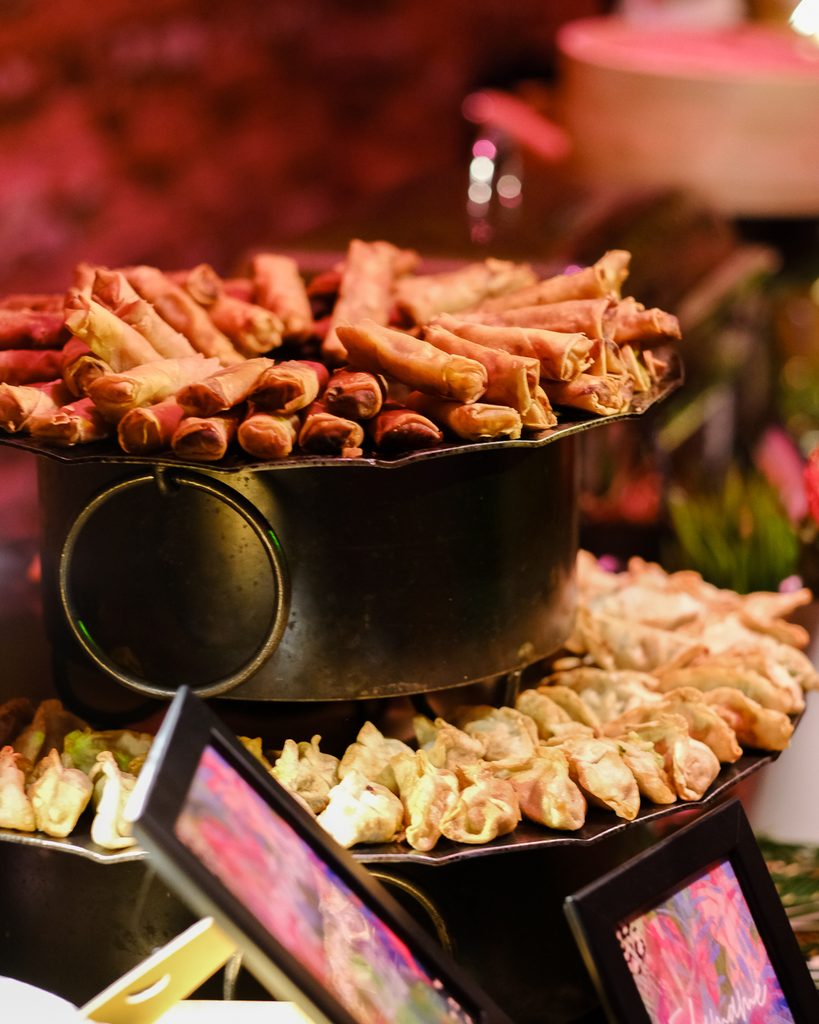
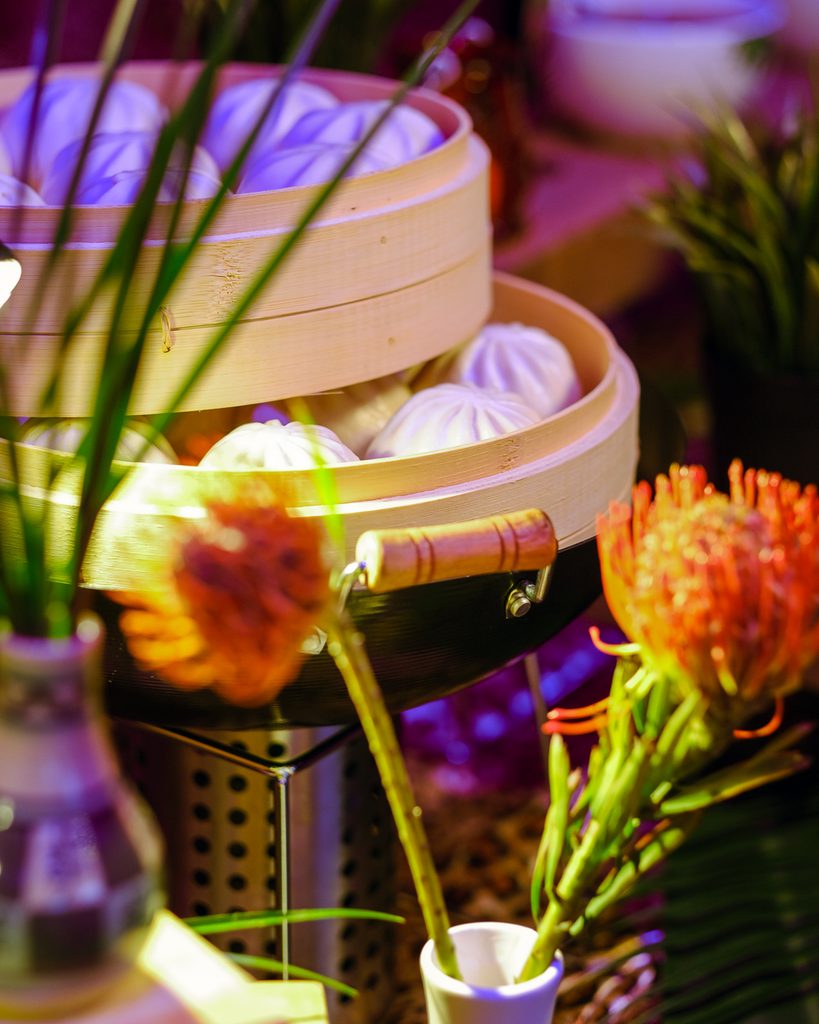
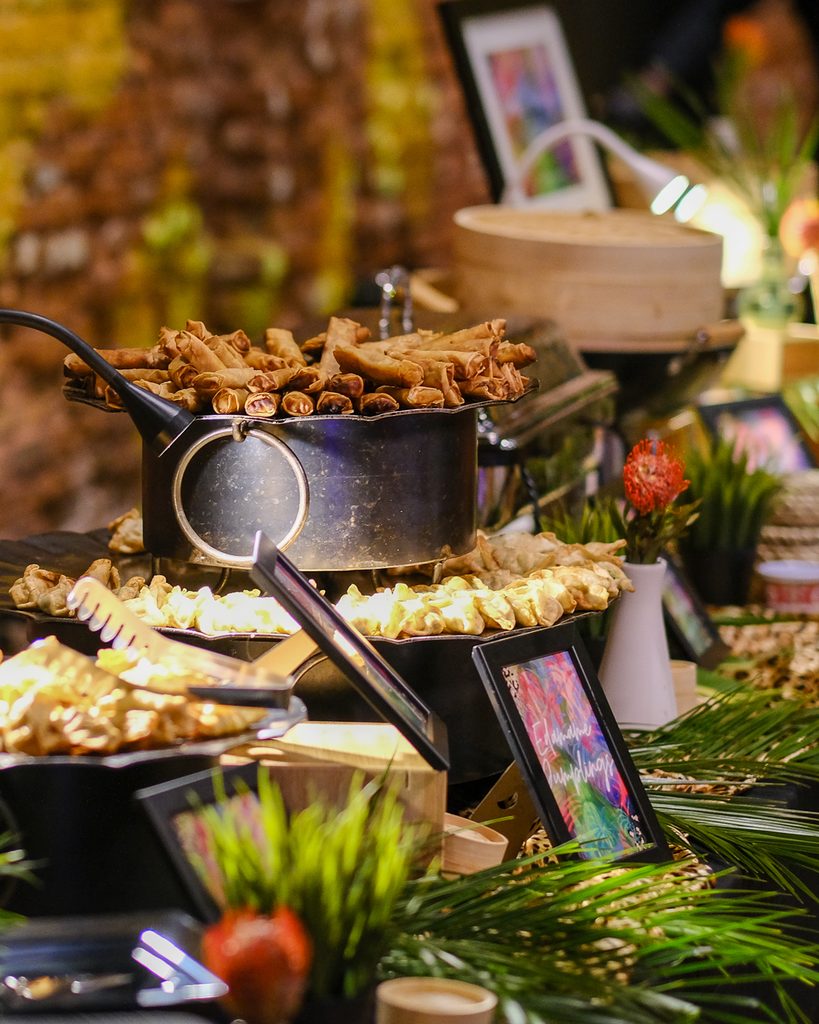
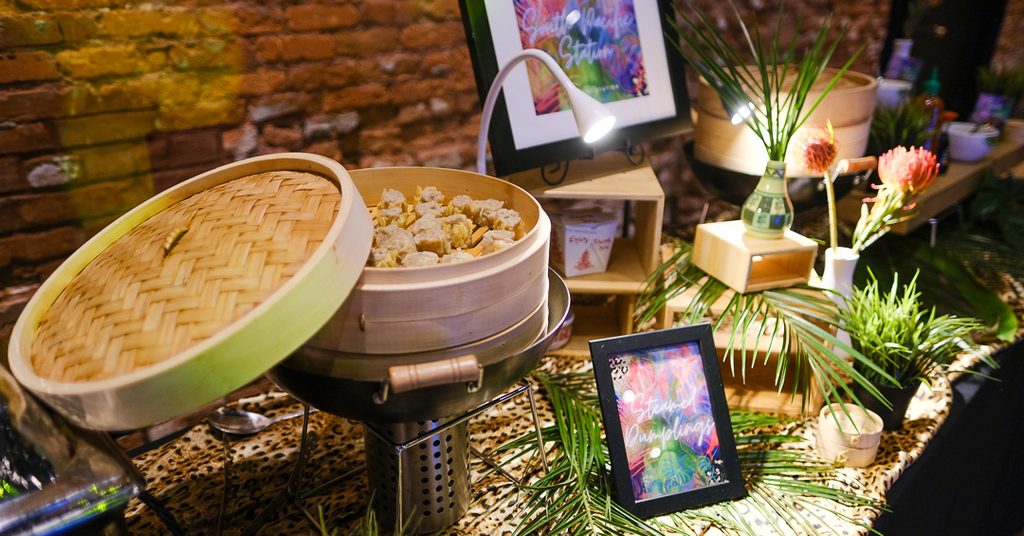
A South Pacific Station brought together vegetable spring rolls, chef-selected steamed potstickers presented in bamboo steamers, and chicken and kimchi meatballs with Korean chili glaze, accompanied by sauces including herbed soy and sweet chili.
The menu changed. The visual design changed. But the underlying thinking didn’t.
Create multiple points of service. Give guests choices. Keep the food interesting. Let the culinary team remain visible. And build the operational plan underneath it all so hundreds, or more than a thousand guests can enjoy the event without thinking about the logistics required to make it happen.
That’s the Good Food Method.
And Then There’s Dessert
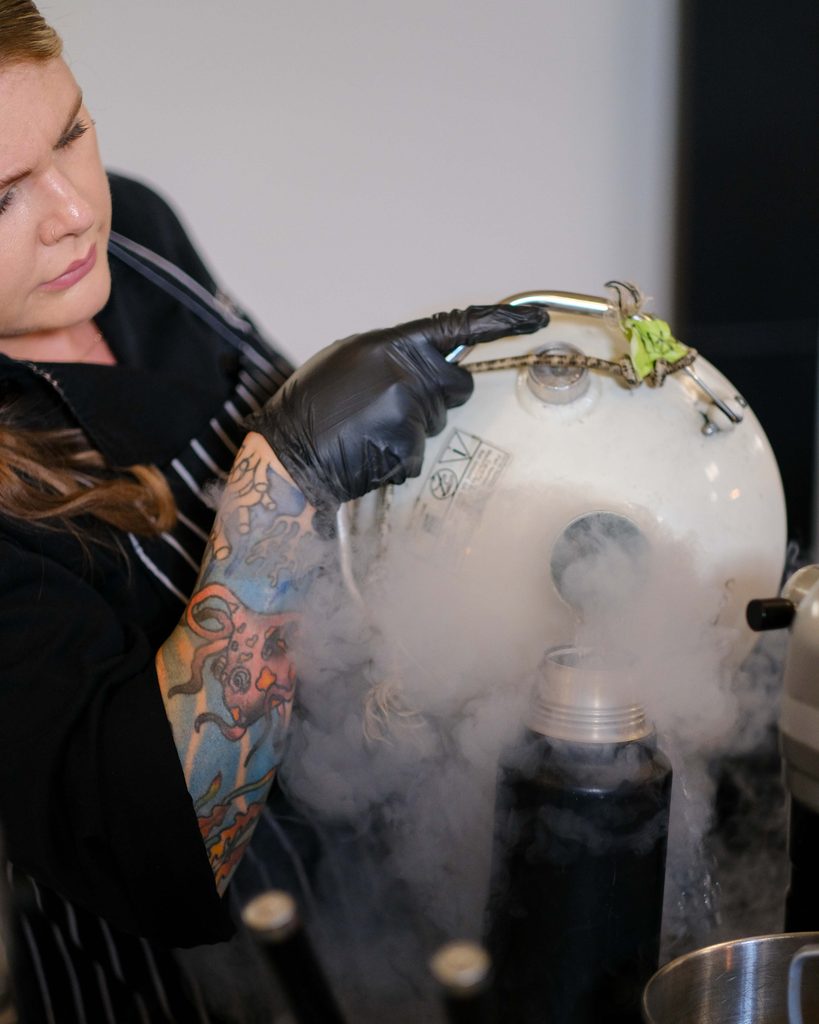
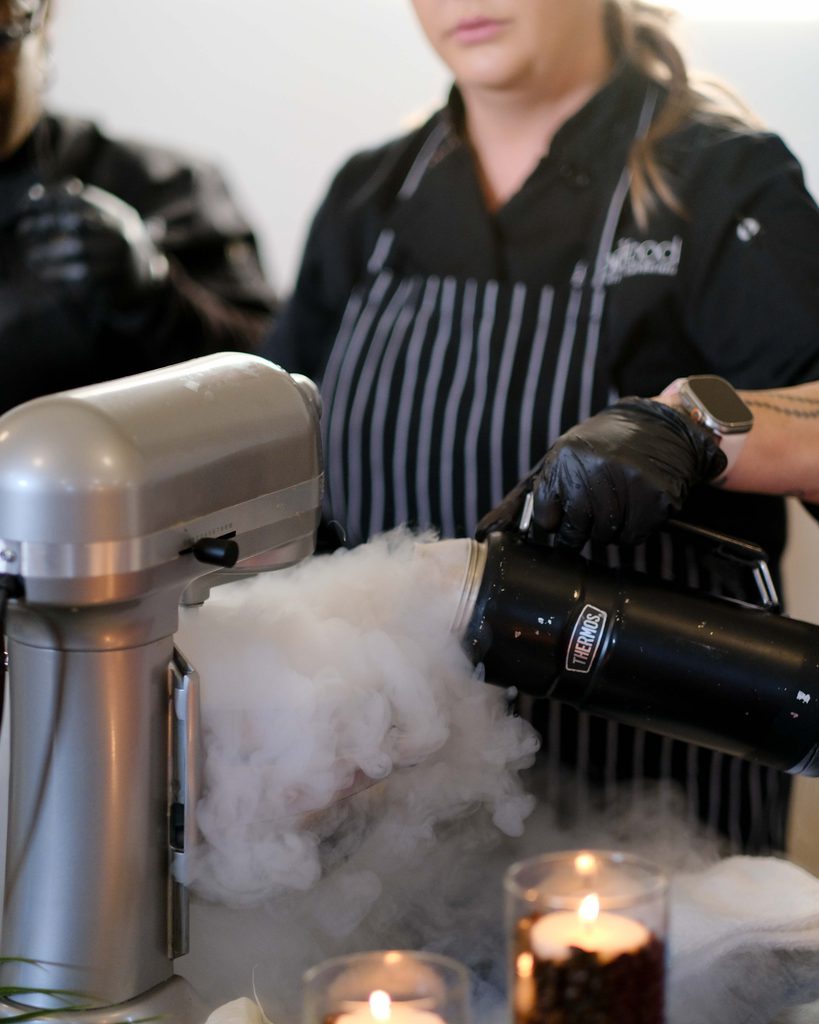
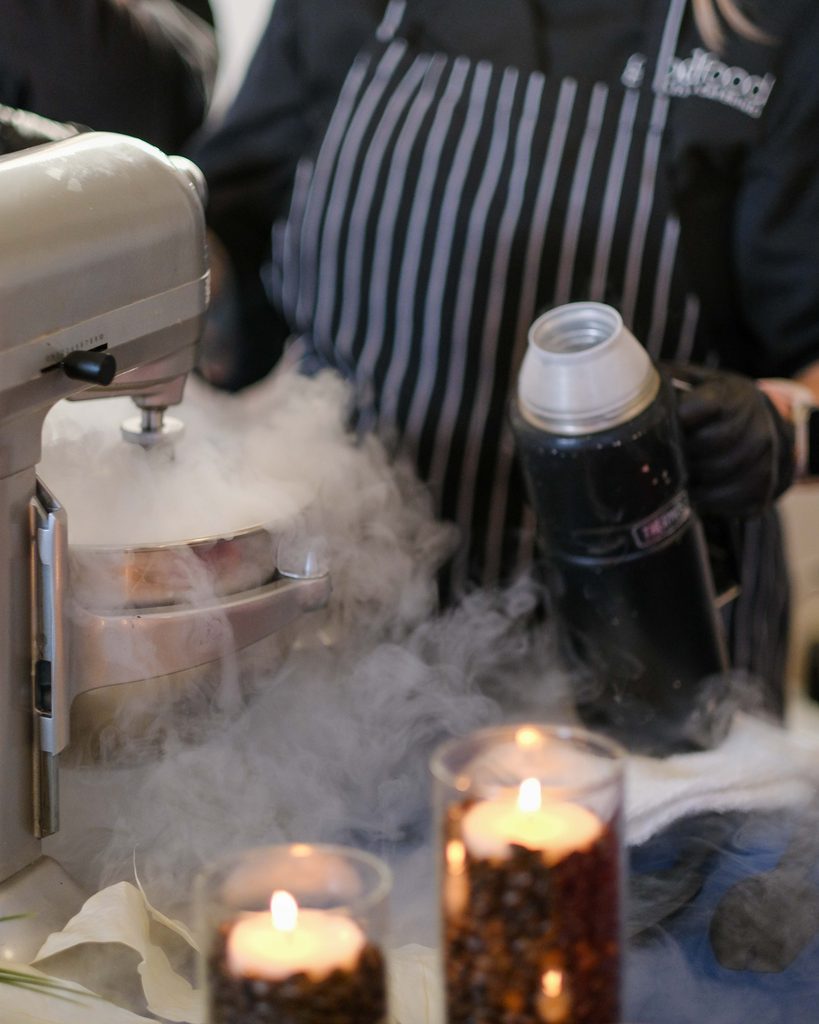
Because after feeding 1,100 people, apparently we decided the evening needed a little molecular gastronomy. The finale paired mini cinnamon-sugar churros with vanilla and coffee ice cream made onsite using liquid nitrogen. Guests could even combine the coffee ice cream with Cuban coffee for a Cuban-inspired affogato. Liquid nitrogen brings some theater to dessert—the fog rolls across the station while the ice cream freezes almost instantly. And that’s a fitting way to end an event like this.
Because even at this scale, food can still be part of the entertainment.
1,100 Guests. One at a Time.
Large-event catering requires a different kind of thinking.
You need systems. Staffing. Production planning. Logistics. Equipment. Redundancy. A menu designed to work at scale.
But none of those things are what the guest came to experience; they came to a party.
Our job is to make all of that planning disappear behind great food and genuine hospitality. Whether we’re serving 100 guests or 1,100, the goal is ultimately the same:
Make the food worth talking about.
Make the service feel personal.
And take care of the person standing in front of us.
Planning a Large Event in Tampa Bay?
For over 18 years, Good Food Events + Catering has specialized in creating chef-driven menus and large-scale culinary experiences for corporate events, galas, fundraisers and celebrations throughout Tampa Bay region of Florida.
Planning for hundreds, or more than a thousand? Let’s talk about how to feed them well.